ARE FLIPDISH
WEBSITES
UP TO SPEED?
A live audit of chickenshack.store — a typical Flipdish-powered takeaway website — against what AI search engines (ChatGPT, Google AI Overviews, Perplexity, Gemini) actually need to find and recommend a business.
The short answer: the site looks fine to a human. To an AI, it is mostly invisible.
The Verdict
Can AI find Chicken Shack?
Barely.
A searcher asks ChatGPT, Google AI Overviews, or Perplexity: "best fried chicken in Stourbridge" or "fried chicken delivery Stourbridge". The AI looks for a crawlable, clearly-identified, well-structured source. Chicken Shack gives it almost nothing to work with.
Flipdish builds fast, good-looking ordering websites. But "good looking to a human" and "readable to an AI" are two different things. Right now, this site is the first and not the second.
AI Visibility Score: Low. The site is a functional ordering page. It is not an AI-discoverable business. This is a Flipdish platform limitation, not a Chicken Shack mistake — every site on that template has the same blind spots.
What Is Wrong
Six problems found on
chickenshack.store
The page is mostly empty until JavaScript runs
When an AI crawler (or Googlebot) fetches chickenshack.store, it receives a shell of skeleton loaders — "Loading menu highlights", "Select store". The real menu, the real content, only appears after JavaScript executes. Many AI systems and some crawlers never run that JavaScript. They see a blank ordering page and move on. Your food is invisible to them.
No structured data (schema.org) at all
There is no Restaurant, LocalBusiness, Menu, FAQPage, or Review schema in the HTML. Structured data is how you tell machines, in plain language, "I am a restaurant, here is my address, here are my opening hours, here is my menu, here is my phone." Without it, AI has to guess — and when AI has to guess, it usually does not cite you.
No address, no phone, no opening hours
The only location clue in the static page is the word "Stourbridge" inside the headline. There is no full address, no phone number, no opening times anywhere a crawler can read. AI search engines cannot confidently recommend a takeaway they cannot pin to a map or a number.
Thin, template content — nothing unique to cite
The body copy is a few marketing paragraphs ("More Cluck For Your Buck"). That is fine for a human, but it gives an AI nothing expert, nothing opinionated, nothing that a competitor site does not also have. AI engines favour unique, expert-led, non-commodity content. A standard Flipdish template is, by definition, commodity content.
Testimonials are present but not machine-readable
There are real customer reviews on the page — that is good. But they are not marked up with Review or AggregateRating schema, and they are not connected to a Google Business Profile entity. So the AI cannot confidently say "Chicken Shack has a 4.8 rating from 120 reviews" because you have not told it in a language it trusts.
No entity clarity — who and what is Chicken Shack?
AI search engines work with "entities" — clearly identified things (a business, a place, a person). Nothing on the static page tells an AI, unambiguously: "This is Chicken Shack, a fried chicken takeaway in Stourbridge, England, phone X, owned by Y." The brand is real. The machine-readable identity is missing.
What Is Needed
The six fixes that make
a Flipdish site AI-visible
Render the real content in the HTML, not behind JavaScript
The menu, the address, the phone, the opening hours, and the key marketing copy must exist in the server-delivered HTML — not load afterwards via an API. If a crawler with no JavaScript sees nothing, that is exactly what AI sees: nothing.
Add Restaurant + LocalBusiness + Menu schema
Structured data is the single fastest win. Tell the machines, in their language: name, cuisine, address, geo-coordinates, phone, opening hours, price range, menu URL, and aggregate rating. This is what makes you eligible for AI Overviews and rich results.
Publish full NAP — Name, Address, Phone — consistently
Your name, address, and phone number must appear identically on your site, on your Google Business Profile, and on every directory. Consistency is how AI confirms you are a real, citable local business. One format. Everywhere.
Add an expert content layer that the template cannot
A Flipdish ordering page will never rank for "best fried chicken Stourbridge" on its own. You need real content: a page about your recipe, your sourcing, your story, FAQs ("Do you deliver to DY8?", "Are you halal?", "What areas do you cover?"). This is what AI extracts and cites. This is what a template cannot give you.
Markup reviews and connect to Google Business Profile
Turn your testimonials into Review schema with an AggregateRating, and make sure your Google Business Profile is claimed, complete, and matches your site exactly. AI engines lean heavily on Google Business Profile data for local food recommendations.
Build presence on the platforms AI learns from
ChatGPT, Perplexity and Google AI do not only read your site. They learn from Reddit threads, Google reviews, TikTok, YouTube, and food blogs. Get genuinely discussed there. Authentic mentions on those platforms are worth more than anything you can put on your own page.
The Real Takeaway
A Flipdish site is an ordering tool, not a discoverability engine. It will take orders from people who already know your name. It will not get you found by the person who asks their phone: "where is the best fried chicken near me?" For that, you need a content-rich, AI-readable site that you actually own — and a content layer the template cannot provide.
About the Author
Meet Neil Murphy
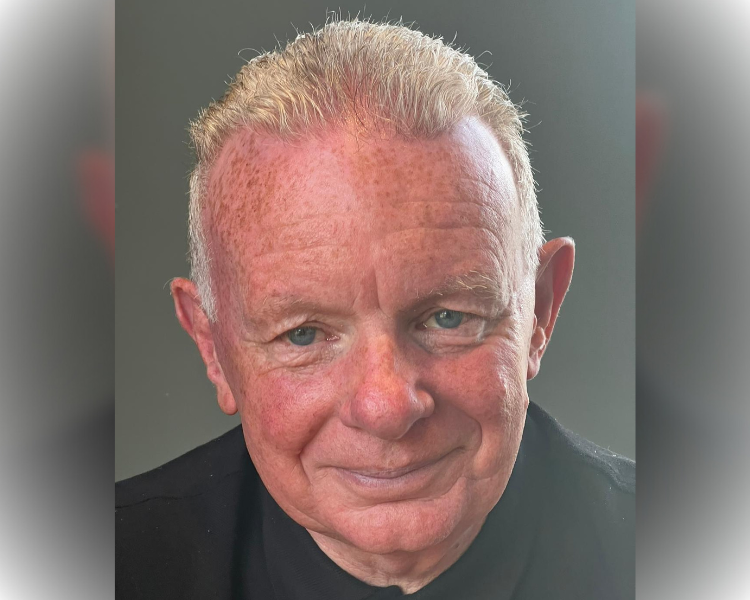
Neil Murphy
The Takeaway Teacher
Director, DeckchairAI
Neil Murphy is a seasoned sales expert, trainer, and entrepreneur with 30+ years experience helping businesses thrive in competitive, cut-throat markets.
He has coached hundreds of salespeople and mentored numerous business owners in sales, marketing, negotiation, business presentations, and new technology.
Neil is an in-demand recruiter and headhunter, respected and known for building high-performing sales teams. He’s also skilled in franchising ventures as well as raising venture capital to scale businesses.
His client portfolio includes Mercedes-Benz, Ralph Lauren, Royal Insurance, Western Provident Association, and hundreds of hospitality venues and restaurants across the UK.
His ability to adapt and innovate with new trends and technology is demonstrated by applying AI in all aspects of business — to his own ventures and other businesses — to drive growth, sales and efficiency.
He has also embraced the global power of podcasts, both as an educational and learning tool, and as an expert podcast interviewer himself.
Neil is a published author with numerous books available on Amazon. His newest publication — Daytime Takeaway Profits — draws on decades of expertise to help takeaway and catering businesses maximize their daytime sales and better expand their market reach.
When not advising businesses or writing, Neil enjoys football, UFC and spending quality time with his family.
Own a site AI can actually find
Talk to Neil about a website you own, with content AI can read, cite, and recommend.
07831 571890 · neil@deckchairai.com
DeckchairAI
© 2026 DeckchairAI · Andover, UK · neil@deckchairai.com