IS YOUR
FOODHUB WEBSITE
UP TO SPEED?
How to get AI to make your Foodhub website more searchable, more quickly — and therefore, make you much more money.
If your sales are slowing, it may well be because of the words below.
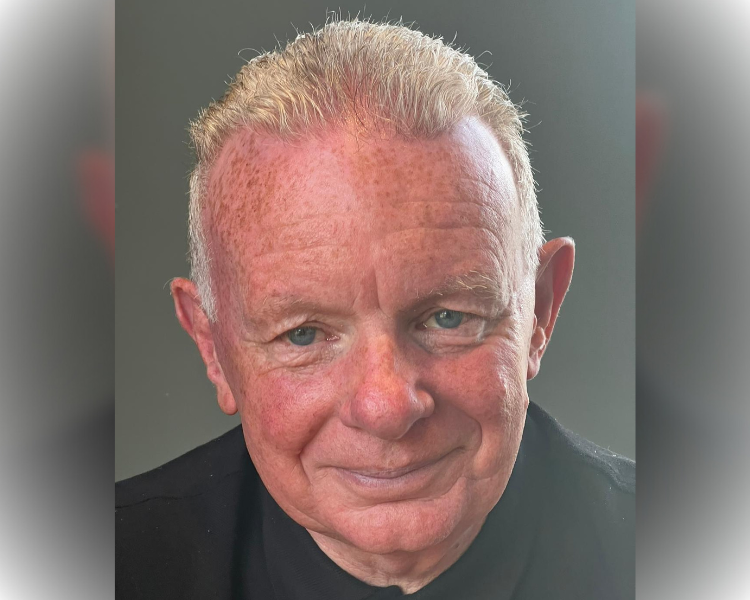
From the desk of
Neil Murphy
The Takeaway Teacher
“Customers are already using AI to choose takeaways — but 83% of QSR locations are still invisible in AI search.”
— Just Eat Takeaway
The Verdict
Can AI find your Foodhub page?
Partially — but not enough.
A customer asks ChatGPT, Google AI Overviews, or Perplexity: "best burger takeaway near me" or "smash burgers in my town". The AI looks for a crawlable, clearly-identified, well-structured source. A typical Foodhub marketplace page gives it only a partial picture — better than an empty shell, but still not enough to confidently cite or recommend your business.
Foodhub marketplace pages are built to take orders on Foodhub’s platform, not to make your business discoverable. The page is functional. It is not an AI-discoverable business asset you own.
AI Visibility Score: Low to Medium. Foodhub does put some real data (address, hours, hygiene rating) into the static HTML — better than a pure JavaScript shell. But broken placeholders, zero reviews, no schema, no owned domain, and generic copy keep it well below the bar AI needs to recommend you.
What Is Wrong
Six problems found on a
typical Foodhub page
A broken template placeholder can leak onto the live page
On real Foodhub pages we have audited, the body copy literally contains the text: "great-tasting {CUISINE} delights" — the {CUISINE} variable was never filled in. To a human that looks like a typo. To an AI crawler, broken placeholders are a strong signal of low-quality, unmaintained, template-generated content — exactly the kind of page AI engines are trained to demote or ignore.
It is on foodhub.co.uk, not a domain you own
Your page lives at foodhub.co.uk/your-town/your-takeaway. Every link, every mention, every bit of search equity you earn points at Foodhub’s brand, not yours. You do not own the asset. If you ever leave Foodhub, the page — and any authority it built — disappears overnight. AI engines weight owned, authoritative domains far more heavily than a sub-page on a marketplace.
No structured data (schema.org) at all
There is no Restaurant, LocalBusiness, Menu, FAQPage, or Review schema in the HTML. Structured data is how you tell machines, in plain language, "I am a restaurant, here is my address, here are my opening hours, here is my menu, here is my phone." Without it, AI has to guess — and when AI has to guess, it usually does not cite you.
Often zero reviews — no social proof for AI to read
Many Foodhub pages show "No Reviews". No rating, no testimonials, no AggregateRating markup. AI search engines lean heavily on review signals and Google Business Profile data to decide who to recommend. A takeaway with no reviews is a takeaway the AI has no reason to trust or surface.
The real menu loads behind JavaScript
The static page shows the name, address, opening hours, and a hygiene rating — which is better than nothing. But the actual menu (the thing a searcher wants) loads only after JavaScript runs, via the "Order Now" page. Many AI crawlers never execute that JavaScript. They see an info page, not your food.
Generic, commodity copy — nothing unique to cite
The body text is auto-generated template filler: "a vibrant takeaway", "the ultimate destination", "fresh, delicious food and quick service". Every Foodhub page says this. There is nothing expert, nothing specific, nothing a competitor does not also have. AI engines favour unique, opinionated, expert-led content. A standard marketplace template is, by definition, commodity content.
What Is Needed
The six fixes that make
a Foodhub page AI-visible
Fix any broken template placeholders immediately
A live page showing raw template variables like {CUISINE} is a red flag to every crawler and every customer. Either fill it in correctly or remove it. This is the cheapest fix on the list and the most damaging to leave broken.
Own a website on your own domain
Stop renting your online identity from a marketplace. A site on your own domain that you own and control is the foundation of AI discoverability. Your Foodhub page can still exist — but it should link to your owned site, not replace it.
Add Restaurant + LocalBusiness + Menu schema
Structured data is the single fastest win. Tell the machines, in their language: name, cuisine, address, geo-coordinates, phone, opening hours, price range, menu URL, and aggregate rating. This is what makes you eligible for AI Overviews and rich results.
Actively collect and markup reviews
Get real reviews on your own site (marked up with Review and AggregateRating schema), and build a complete, reviewed Google Business Profile. AI engines trust third-party review signals heavily — a 4.5-star profile with 80 reviews gets cited; "No Reviews" does not.
Add an expert content layer the template cannot
A Foodhub info page will never rank for "best [your cuisine] in [your town]" on its own. You need real content: a page about your recipe, your ingredients, your story, FAQs ("Do you deliver to my area?", "Are you halal?", "What areas do you cover?"). This is what AI extracts and cites. This is what a marketplace template cannot give you.
Build presence on the platforms AI learns from
ChatGPT, Perplexity and Google AI do not only read your site. They learn from Reddit threads, Google reviews, TikTok, YouTube, and food blogs. Get genuinely discussed there. Authentic mentions on those platforms are worth more than anything you can put on a marketplace page.
The Real Takeaway
A Foodhub page is an ordering tool on someone else’s land, not a discoverability engine you own. It will take orders from people who already know your name. It will not get you found by the person who asks their phone: "where is the best [your cuisine] near me?" For that, you need a content-rich, AI-readable site on your own domain — and a content layer the marketplace template cannot provide.
About the Author
Meet Neil Murphy
Neil Murphy
The Takeaway Teacher
Director, DeckchairAI
Neil Murphy is a seasoned sales expert, trainer, and entrepreneur with 30+ years experience helping businesses thrive in competitive, cut-throat markets.
He has coached hundreds of salespeople and mentored numerous business owners in sales, marketing, negotiation, business presentations, and new technology.
Neil is an in-demand recruiter and headhunter, respected and known for building high-performing sales teams. He’s also skilled in franchising ventures as well as raising venture capital to scale businesses.
His client portfolio includes Mercedes-Benz, Ralph Lauren, Royal Insurance, Western Provident Association, and hundreds of hospitality venues and restaurants across the UK.
His ability to adapt and innovate with new trends and technology is demonstrated by applying AI in all aspects of business — to his own ventures and other businesses — to drive growth, sales and efficiency.
He has also embraced the global power of podcasts, both as an educational and learning tool, and as an expert podcast interviewer himself.
Neil is a published author with numerous books available on Amazon. His newest publication — Daytime Takeaway Profits — draws on decades of expertise to help takeaway and catering businesses maximize their daytime sales and better expand their market reach.
When not advising businesses or writing, Neil enjoys football, UFC and spending quality time with his family.
Own a site AI can actually find
Talk to Neil about a website you own, with content AI can read, cite, and recommend.
07831 571890 · neil@deckchairai.com
DeckchairAI
© 2026 DeckchairAI · Andover, UK · neil@deckchairai.com