IS PATISSERIE VALERIE
AI SEARCHABLE?
An independent audit of the Patisserie Valerie birthday cakes store — and the exact fixes needed to make AI assistants recommend it.
Audited 27 August 2026 · Prepared by DeckchairAI
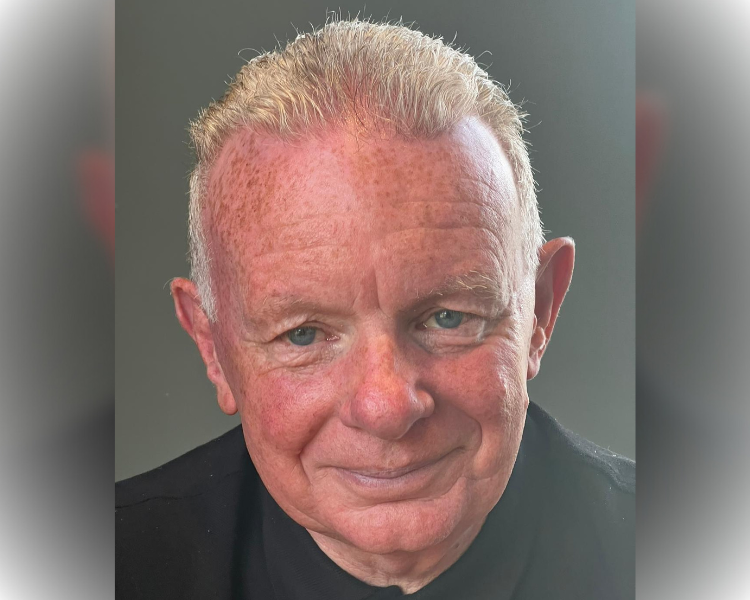
From the desk of
Neil Murphy
The Takeaway Teacher
Site Snapshot
What we found on patisserie-valerie.co.uk
Brand
Patisserie Valerie — UK heritage patisserie (est. 1926)
Domain
Owned domain (patisserie-valerie.co.uk), Shopify storefront
Catalogue
42 birthday cakes + age, style, flavour & dietary sub-collections
Fulfilment
UK-wide delivery (GB, NI, ROI regions)
The Verdict
Can AI find Patisserie Valerie?
Mostly — a strong base, the machine-readable layer is missing.
When a customer asks ChatGPT, Google AI Overviews, or Perplexity: "best birthday cake delivery UK" or "vegan birthday cake for 20 people", the AI looks for a crawlable, clearly-identified, well-structured brand it can confidently cite. Patisserie Valerie starts from a strong position — it owns its domain, carries genuine heritage (est. 1926), and writes real, unique category copy rather than commodity template filler. That alone puts it ahead of most Shopify stores.
But the store still leans on JavaScript to render product and review data, sends crawlers through dozens of thin faceted filter pages, and has no expert content or FAQ layer answering the exact questions buyers type into AI. So while an AI can identify Patisserie Valerie as a brand, it cannot yet confidently cite specific product answers — "do they do a vegan drip cake for 20?" is a question the site does not answer in a machine-readable way.
AI Visibility Score: Medium-High. Stronger than most: an owned domain, a heritage brand (since 1926), real unique category copy and a clear taxonomy. What is missing is the machine-readable layer — Product/Collection/AggregateRating schema, consolidated faceted URLs, transcripts, and an FAQ/buying-guide content hub — that lets an AI go from "I know this brand" to "I will cite this specific cake for this specific query".
What Is Wrong
Six things holding
Patisserie Valerie back from AI
Faceted navigation creates dozens of thin, near-duplicate pages
The birthday cakes page exposes rich filters — Type/Style (Drip, Ombre, Naked, Tall, Two-Tier), Size (6", 8", 9", portions), Occasion, Flavour, Topping, Dietary. Brilliant for a human. But every filter combination can produce its own URL, and most carry no unique text — just the same 42 products re-sorted. AI engines treat clusters of thin, near-identical pages as low-value and may demote or skip them entirely.
Products and reviews are not declared as structured data
On the collection page the 42 cakes exist as cards, but there is no CollectionPage + ItemList schema telling a crawler, in its own language, "this is a list of 42 birthday cake products, here are their names, prices, images and ratings". Ratings, where present, tend to be rendered by a JavaScript review widget that does not output matching AggregateRating JSON-LD in the static HTML — so the machine sees star icons, not a verifiable "4.8 average from 120 reviews".
Product video previews have no text the AI can read
Several product cards load a rotating video preview (preview_images thumbnails). Video sells to humans — but AI crawlers cannot watch a clip. With no written description of what each video shows (the decoration, the layers, the finish), all that persuasive detail is invisible to ChatGPT, Perplexity and Google AI.
No FAQ or expert content layer for buyer-intent questions
There is no page answering the questions people actually type into AI assistants: "What size birthday cake for 20 people?", "Do you do vegan birthday cakes?", "How far in advance should I order?", "What is a naked cake vs a drip cake?". Without that content, Patisserie Valerie can never be the source the AI quotes — a competitor or food blog that writes it will be.
The heritage brand story is not leveraged as a citable asset
"Since 1926" is a powerful trust and entity signal — but it is not reinforced with Organization schema (founding date, logo, same-as links to Wikipedia/social/Knowledge Panel) or a crawlable history/our-story page. AI engines build a "brand entity" from consistent, structured, verifiable signals. Patisserie Valerie has the history; it has not yet packaged it for machines.
Local delivery intent is gated behind a JavaScript selector
Buyers ask AI: "birthday cake delivery near me" or "birthday cake delivery London". The site handles regions through a JS country/region selector (GB, NI, ROI). Without clear, crawlable geo and coverage signals (delivery areas, lead times, collection points), an AI cannot confidently answer the local-intent queries that drive real cake orders.
What Is Needed
Six fixes that make
Patisserie Valerie AI-visible
Add Product, Offer & AggregateRating JSON-LD on every cake
On each product page output Product schema with name, image, price, availability, brand and an AggregateRating pulled from real review data — not a JS widget. This is the fastest win and the one that makes you eligible for AI Overviews and rich results. Validate every top-seller in Google’s Rich Results Test until it passes clean.
Add CollectionPage, ItemList & BreadcrumbList schema
On /collections/birthday-cakes declare the collection machine-readably: a CollectionPage with an ItemList of the 42 products (name, url, price, image), plus BreadcrumbList so every page states where it sits in the site. This lets an AI map "birthday cakes" to a real, citable list instead of guessing from cards.
Consolidate faceted URLs and promote real category pages
Add canonical tags and noindex to thin filter combinations so crawlers stop wasting budget on near-duplicate pages. Then convert the high-intent facets — Vegan/Plant-Based, Drip Cake, Naked Cake, and the age milestones (18th, 21st, 50th) — into real category pages with unique, descriptive intros. Each becomes a citable answer page.
Add an FAQ + buying-guide content hub
Publish and mark up with FAQPage schema the questions buyers ask AI: "What size cake for 20 people?", "Do you do vegan/plant-based birthday cakes?", "How far in advance should I order?", "Naked vs Drip vs Ombre explained", "Cake portion guide". These are the queries that drive orders — own the answers and the AI will cite you.
Add text descriptions and transcripts for product videos
For every product video preview, publish a short written summary (decoration, layers, finish, flavours) on the page. You keep the video for shoppers; you give the AI the words it needs to understand and repeat what each cake actually looks like.
Strengthen the brand entity with Organization schema + coverage signals
Output Organization schema with founding date 1926, logo, and same-as links to Wikipedia, social profiles and the Knowledge Panel. Publish a crawlable "Our Story / Since 1926" page, and add clear delivery-area and lead-time signals so AI can answer local-intent ("birthday cake delivery near me") with confidence.
Do These Four This Week
Pass Product + AggregateRating JSON-LD on the Rich Results Test for the top 5 birthday cakes.
Add canonical tags to every faceted filter URL and noindex the thinest combinations.
Publish a "Cake portion size guide" FAQ page with FAQPage schema (drives "cake for 20 people" queries).
Add a written summary block under each product video preview.
About the Author
Meet Neil Murphy
Neil Murphy
The Takeaway Teacher
Director, DeckchairAI
Neil Murphy is a seasoned sales expert, trainer, and entrepreneur with 30+ years experience helping businesses thrive in competitive, cut-throat markets.
He has coached hundreds of salespeople and mentored numerous business owners in sales, marketing, negotiation, business presentations, and new technology.
Neil is an in-demand recruiter and headhunter, respected and known for building high-performing sales teams. He’s also skilled in franchising ventures as well as raising venture capital to scale businesses.
His client portfolio includes Mercedes-Benz, Ralph Lauren, Royal Insurance, Western Provident Association, and hundreds of hospitality venues and restaurants across the UK.
His ability to adapt and innovate with new trends and technology is demonstrated by applying AI in all aspects of business — to his own ventures and other businesses — to drive growth, sales and efficiency.
He has also embraced the global power of podcasts, both as an educational and learning tool, and as an expert podcast interviewer himself.
Neil is a published author with numerous books available on Amazon. His newest publication — Daytime Takeaway Profits — draws on decades of expertise to help takeaway and catering businesses maximize their daytime sales and better expand their market reach.
When not advising businesses or writing, Neil enjoys football, UFC and spending quality time with his family.
Make Patisserie Valerie AI-recommendable
Talk to Neil about installing the schema, content and faceted-URL fixes this audit calls for.
07831 571890 · neil@deckchairai.com
DeckchairAI
© 2026 DeckchairAI · Andover, UK · neil@deckchairai.com
Independent audit. Patisserie Valerie is a trademark of its respective owner; this report is independent commentary.